

Histoires de réussite des propriétaires
Découvrez de vraies histoires de réussite de propriétaires de scieries Norwood partout dans le monde. Voyez comment les passionnés et les professionnels transforment des rondins en bois, en entreprises et en héritages durables.
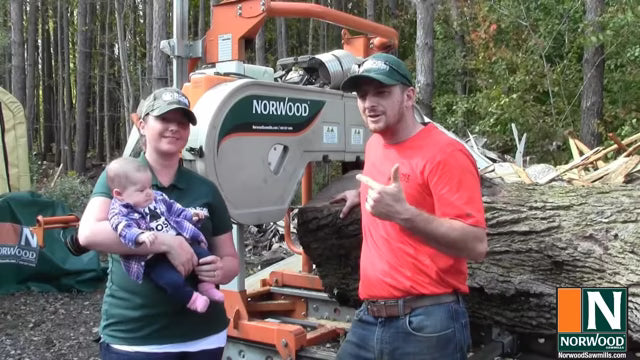
UN INVESTISSEMENT DANS LA FAMILLE... ET DANS LEGACY.
« Nous avons créé de nombreux meubles, cadeaux, objets artisanaux et du bois de chauffage de rechange pour notre famille et nos amis. Mais ce qui rend ma femme et moi le plus heureux de notre investissement, ce sont les leçons et les souvenirs que cela a créés avec nos 3 enfants. Ils ont développé un intérêt pour le travail et la création avec leurs mains. Être dehors, construire, apprendre et travailler ensemble nous a rapprochés. »
- Steve et Nicole R.
Propriétaires de LM29
Histoires de réussite des propriétaires
Histoires de réussite des propriétaires

La scierie et le conte de Dave Boyt à Pottershop Hollow
I generally start my videos for Norwood with, “Hi, I’m Dave Boyt with the Pottershop Hollow Tree Farm & Portable Sawmill.” Pottershop Hollow is a special place with a long and colorful history. You can find it in Newton County, Missouri, in the far southwestern corner of the state. {mainImage} The actual pottery shop, for which it was named, was in operation in the late 1800s, next to a spring that still flows through thick clay soil. You can still find a few ceramic shards near the spring and, if you know where to look, you can just make out the outline of the stone foundation of a one-room cabin, no more than twelve feet square hidden in a buckbrush thicket. There is also evidence of a moonshine still, which would have been one of many hidden away in these Ozark hills. Pottershop Hollow was near the site of hard-fought battles during the Civil War, when the Thomas Spring, as it was known, yielded its clear, cool water to all who dipped their tin cups into it, regardless of rank or uniform. I’d like to think that they found peace and serenity there as well. Seventy-five years later, soldiers again dipped their canteens in the spring as they trained for battle in Europe and the Pacific—and later in Korea—at Camp Crowder, also known as “Camp Swampy” thanks to the inspiration of Beetle Bailey cartoonist, Mort Walker, who was stationed there during WWII. Dave Boyt, with WonderDog by his side, a faithful companion on many adventures in the woods and at the sawmill. Thanks to her dedication and vigilance, Dave has never had to worry about invasions by rabbits or squirrels. Thomas Spring, near the head of Pottershop Hollow, has never gone dry or frozen over. In 1956, some of the land was sold off as surplus property and this 720-acre parcel has been under our family’s stewardship since 1971. As one of the oldest certified tree farms in the state, it comprises an amazing diversity of oak, hickory, ash, cherry, walnut, elm, sassafras, persimmon, sycamore, maple, locust, mulberry, Osage orange, and eastern red cedar. A great place to bring up a family, and not a bad place for a sawmill! When you hear mention of “Pottershop Hollow” in one of my videos, I hope you will have an idea of what a special place this is. Sawmilling has a long history in these parts. In the post-Civil War era, timber was cut for railroad ties. When soldiers returned home after WWII, it was again harvested for new housing. With the best timber sold off, most of the surrounding land was cleared for cattle grazing. With its thin, rocky soil on the hilltops and steep slopes on the edge of the Ozark Mountains, Pottershop Hollow was spared that fate and is now a forest island, surrounded by neighboring pastures and hayfields. While agricultural runoff has affected the water quality, making it less suitable for human consumption, the spring remains a cherished gathering place for family reunions and moments of solitude. It’s a place where one can enjoy the calls of blue jays and the hammering of woodpeckers. Remarkably, the spring has never run dry or frozen over, continuing to provide water for the wildlife that inhabits the area. “Old Henry”, my 1953 8N Ford has pulled many a log out of the woods and loaded them on the mill. Just after this picture was taken, I realized that I hadn’t raised the log stops and the log rolled off the other side of the mill. When I got my first band sawmill, there were no YouTube videos or social media channels to guide my sawmill journey. I learned by trial and error—lots of errors! I bet any sawyer can describe cutting the first board on a mill. I remember taking a deep breath, throttling up the engine, and just as the blade touched the log, there was a loud BANG! After shutting down the engine, I found part of the blade sticking out through the front shield, twisted into a pretzel around the band wheel axle so tight that I had to cut it off. Ever since then, I’ve remembered to tension the blade before cutting. I think everyone who has run a sawmill has looked at the aftermath of a lapse in judgment and wondered, “What was I thinking?” Ignore a blue stain at the bottom of an oak log, and you’re bound to slice through metal, fence wire if you’re lucky, but more likely a nail or bolt. There’s no better metal detector than a new band saw blade! If you want to start a conversation with a sawyer, just ask what the most interesting thing they’ve hit while milling a log. The metal strike doesn’t always come from the log, though. Leaving the log stops too high invites a memorable encounter with the blade. I figure there are two types of sawyers: those who will cut into the log stops, and those who will do it again—usually when someone is watching. There was a terrible screeching sound when I cut this notch in the log stop. The blade made quite a racket, too On the other hand, the log stops can be too low, especially when loading a log on the mill or turning the log with hydraulics. I’ve had to reload more than one log on the mill after it rolled over the log stops. Gravity is always turned on, and it doesn’t care where anyone is standing when a log tumbles off the mill. Good judgment, it is said, comes from experience… and experience comes from bad judgment. For example, the first time I had to back the blade out of a cut, it just made sense that it would be easier with the blade spinning. Before I could react, the blade came off the band wheels, and I had another addition to my growing collection of steel pretzels. I now keep a couple of plastic felling wedges in the sawmill toolbox to open up the kerf when backing the blade out of a cut. By the way, not raising the blade enough to clear the top board on the cant when returning the saw carriage is another dramatic way to destroy a blade. As soon as the back side of the blade hits the wood, off it comes. The blue stain was a clear indication of metal in the log—but it was walnut. I decided to charge extra for the lumber. After all, when’s the last time you saw walnut with a metal inlay? Some of the more interesting experiences come from the expectation that people around you will use even basic common sense. Everyone wants to help around the mill. At best, it can be a distraction, like when, after repeated warnings, someone stands in line with the sawdust chute while the mill is cutting. Once, while putting on a new blade, a customer decided to help by giving the blade a sharp pull, dragging the razor-sharp teeth across the palm of my left hand. Sure, it would have been good judgment to wear gloves, but now, if anyone even looks like they’re going to touch the blade while I’m replacing it, I shoo ‘em away. This anchor bolt was a real saw-stopper. Hitting it sideways like that, the blade didn’t stand a chance! Sawmilling isn’t for everyone, but those of us who choose to slice up logs—either for fun and profit or as full-time work—are part of a pretty tight-knit group. Like amateur radio and flying (two other interests of mine), when you’re around other sawyers, you’re among friends. There is always camaraderie, friendship, shared experiences, and plenty of free advice. Whether it’s trucks, chainsaws, or sawmills, pride in expertise and brand loyalty runs high. Whether you fell timber with a Humboldt notch, open-face bore cut, or Dutchman, and whether you pull the logs out of the woods with a Timberjack skidder or an old 8N Ford, there are stories to be told. Friendly advice from sawyers and technical savvy from Norwood’s support team will get you up and running if you’re a new sawyer, and we “old-timers” have a lot of tricks and experience to share with anyone who will listen. And we listen, too, and learn from sawyers with all levels of experience! Looking at many of the social media posts by Norwood sawmill owners, it looks like there’s a whole new generation that will soon be sharing their experiences as well. I look forward to reading, watching, and hearing about your sawmilling journey.

Construire des meubles, des bricolages et des souvenirs.
Nous avons notre scierie LM29 Norwood depuis environ 2 ans. Nous avons créé de nombreux meubles, cadeaux, bricolages et du bois de chauffage de rechange pour notre famille et nos amis. Mais ce qui rend ma femme et moi le plus heureux de notre investissement, ce sont les leçons et les souvenirs que cela a créés avec nos 3 enfants. Ils ont développé un intérêt pour le travail et la création avec leurs mains. Être dehors, construire, apprendre et travailler ensemble nous a rapprochés. Les photos de notre fils Hunter, âgé de 13 ans, ne sont qu’un exemple de la façon dont il a apprécié notre scierie Norwood et a appris plusieurs leçons en chemin. On a coupé cet érable ensemble, on l’a moulé ensemble. Maintenant, après l’avoir construit ensemble, Hunter adore s’asseoir sur le divan avec notre famille et regarder sa belle création avec fierté. La table et les souvenirs seront avec notre famille pour toujours! Steve et Nicole R. Propriétaires de LM29

Manipulation du bois après la tempête de Joplin
Blog Overview: After the Joplin F-5 tornado that ripped the town apart in May, 2011, Norwood was able to help the citizens with relief It took Joplin, Missouri only thirty-four minutes to lose nearly half of its urban trees during an F-5 tornado that ripped the town apart on May 22, 2011. Nearly a third of the city including homes, businesses, and a major hospital complex were destroyed that night. Century-old trees came crashing down on homes, streets, and miles of power lines, causing further damage and complicating a massive and difficult search-and-rescue effort that lasted more than a week. Removal of storm debris began almost immediately after the storm. A continuous line of trucks rumbled down the streets hauling the debris to the local landfill. With the Federal Emergency Management Agency (FEMA) in charge of the initial cleanup, there was no attempt to separate out the debris or salvage or recycle any of the 5 million cubic yards of debris, including logs. Jon Skinner, a forester with the Conservation Department who works in the Joplin area explains that, “Storm damage in the path of the tornado all ended up in the landfill. It had to be buried in a certain amount of time in order to get reimbursed by FEMA.” While working as a volunteer during the clean-up, I was struck by the sight of the trees. Although many were uprooted, thousands stood like ghosts, stripped bare of leaves, branches, and bark by the 200 mph wind. Clearing wind-thrown trees is challenging, even for experienced loggers. There is every kind of stress possible–compression, tension, shear, and torsion–sometimes all in the same log. Root balls return to their upright position with amazing speed once the stem has been cut, and the grit in the logs made short work of a sharp chain. The presence of other volunteers–some of whom had just purchased their first chainsaw for the occasion made the job even more hazardous. Several times, I had a tree roll unexpectedly because someone else decided to work on the same tree without bothering to say anything. Most chainsaw-wielding volunteers wore no safety gear, and some came in shorts and sandals. A coordinator told me that a volunteer had cut himself open with a chainsaw the previous day and required a number of stitches. As I stood in line to get a free tetanus shot, I wondered how many volunteers went to the hospital with a nail embedded in a foot. Those of us with hard hats, chaps, and steel-toe boots tended to work together and let the others figure out how to free their pinched bars–although, tightly wedged in a log was probably the best place for their saws! Trees have emerged as a symbol of hope and renewal in Joplin. Those that survived the tornado are cherished, and many homeowners planted new trees even before the last of the debris of their homes had been cleared away. Pledges for donations of seedlings are coming in from nurseries around the country, but urban forester Jon Skinner is concerned about the future of the trees. “We’re getting all these donations of trees, but most homeowners don’t take care of them,” he says. “And we don’t have the city staff to take care of transplanted trees in the parks. I tell people to let the dust settle and wait until the area has been cleaned up.” Skinner thinks that 2014 will be a good year to replant. Although most people want to see tree-lined streets in Joplin, planning and implementing urban reforestation is a tremendous challenge. Skinner described a few of the issues. “The City Manager is in favor of tree-lined streets, but the City ordinance says that nothing can be planted within ten feet of an underground utility. In most of Joplin, there’s a utility on both sides of the street, so that will restrict 90% of the potential replanting.” To avoid the problems that arise from monocultures, Skinner says he is encouraging a diversity of species on both City and private property. More than a year after the tornado, the tree removal continues. Homeowners watched helplessly as trees that survived the tornado are succumbing to the worst drought since 1954. New housing and business developments are taking thousands of more trees. Clearing land for the new hospital alone required the removal of 100 acres (40 ha) of Ozark hardwoods. Skinner says, “I really think you could have had a couple of truckloads of logs [for lumber] just from the site where they are building the new hospital, but all the wood went for mulch except for some small trees that were dug up to be replanted on the hospital site.”The author winches a post oak log onto the bed of his portable sawmill. The log came from a tree that was salvaged after the 2011 Joplin, MO tornado, and will be used to make furniture for the Elk’s Lodge, which was destroyed. Not all of the wood was buried or ground for mulch. Although most sawmills refuse to take logs from urban areas because of the chance of hitting nails and other objects embedded in the trees, I salvaged as many logs as possible. My sawmill is a Norwood MX34 portable band saw mill. It works well for the variety of sizes and shapes of the logs that come from urban trees–up to 34” (86 cm) in diameter–and the blades are inexpensive and easy to replace when I strike metal in a log. The mill only takes ten minutes to set up, so it is feasible to move it for just a few logs. It is quiet and portable enough that I have even backed it into driveways to saw up a log or two. I even let the homeowners run the mill. With the destruction all around them, I think it gives them an extra measure of satisfaction to participate in the salvage of the lumber that will be made into furniture that they can keep as a piece of their life from before the storm. The author cuts a white oak log from a tree that had died during the summer drought of 2012. The mill handles a variety of sizes and shapes of logs, which makes it particularly useful in salvage and urban lumber. The rewards of running a small sawmill are more than worth the effort it takes to meet the challenges. Century-old oak, maple, and walnut trees produce amazing lumber. But even some of the smaller logs have special significance. Six post oak logs came from the Elk’s Lodge where three people died in the tornado. I donated the boards to a Joplin high school where students will make furniture to go into the new Elk’s Lodge. Even though post oak makes very poor lumber, the furniture will, no doubt, be as highly valued as any made from exotic wood from Africa or South America. One of the best information sources for sawmilling is the Arboristsite forum. Forum topics cover the range of tree care issues, including sawmills. The people who post on the forum express opinions, share experiences, and offer encouragement to anyone who logs on. Sawmill & Woodlot Management magazine has a lot of information on equipment, as well as articles on forestry and tree care. Norwood’s Town Hall forum is also a great source of sawmilling information that is helpful to anyone interested in portable band sawmills. Other forums include Woodweb.com, ForestryForum.com, and Treebuzz.com. Joining these forums is a great way to kick around ideas. If you see postings by Post Oakie, you’ve found me!

Le parcours dynamique d’un couple dans la scierie, bon pour l’environnement et rentable... Rencontrez Rose Forestry
Rose Forestry, du nord de l’État de New York, est une entreprise familiale avant-gardiste qui voit et débloque la valeur énorme des ressources naturelles que presque tout le monde a manquée. Utilisant leur Norwood LumberPro HD36, leur entreprise compte deux « divisions » : premièrement, ils scient sur mesure sur contrat pour d’autres. Deuxièmement, ils ont une boutique pour menuisiers et artisans qu’ils approvisionnent avec des dalles et planches uniques usées à partir de bois récupéré et de bois cultivé de façon durable. Greg & Ashley RoseHD36 Propriétaire

Construire des meubles, des bricolages et des souvenirs.
Nous avons notre scierie LM29 Norwood depuis environ 2 ans. Nous avons créé de nombreux meubles, cadeaux, bricolages et du bois de chauffage de rechange pour notre famille et nos amis. Mais ce qui rend ma femme et moi le plus heureux de notre investissement, ce sont les leçons et les souvenirs que cela a créés avec nos 3 enfants. Ils ont développé un intérêt pour le travail et la création avec leurs mains. Être dehors, construire, apprendre et travailler ensemble nous a rapprochés. Les photos de notre fils Hunter, âgé de 13 ans, ne sont qu’un exemple de la façon dont il a apprécié notre scierie Norwood et a appris plusieurs leçons en chemin. On a coupé cet érable ensemble, on l’a moulé ensemble. Maintenant, après l’avoir construit ensemble, Hunter adore s’asseoir sur le divan avec notre famille et regarder sa belle création avec fierté. La table et les souvenirs seront avec notre famille pour toujours! Steve et Nicole R. Propriétaires de LM29

Sciage en grande dimension dans le Nord du Canada
Phil Andree set up his homestead near Edmonton, Alberta, Canada. He is typical of the tough, independent residents of the area. “We’re about 8 hours south of the Arctic Circle, he explained, and there’s not a whole lot between here and the North Pole.” “This is where men are men and women are... well... scarce. Who in their right mind would decide to settle down here and build a farm? It is brutal here— minus 50 degrees (-58oF) in February.” A grader operator in the oil fields by day, Phil runs a Norwood LumberMan MN26 sawmill evenings and weekends—often by electric lights— to stretch out the short winter days. “I’m up at 5:00, come home around 5:00 in the evening, have supper, then go out in the bush and cut lumber for an hour or two,” he explained. The evening I called Phil, he had just come in after such an evening of sawmilling in -20oC (-4oF) degree weather. “Yeah, this is where men are men and women are... well... scarce,” he laughed, “Who in their right mind would decide to settle down here and build a farm? It is brutal here— minus 50 degrees (-58oF) in February.” “Everything is lumber and oil in these parts,” says Phil. A lot of sawmills cut rig mats for heavy equipment. They are 2x12s, 3 layers thick, ten feet wide, by forty feet long. “We make highways through the bush out of lumber so we can drive heavy equipment and tractor trailers back through there. Thousands of these pads get moved every day.” Cutting lumber for these “boardwalk” roads keep loggers and sawyers busy. But Phil had other plans for his Norwood sawmill. Sawing in Sub-Freezing Temperatures“When I moved to Alberta, I figured I needed a sawmill for the lumber to build a workshop and barn for a lambing operation,” Phil explained. “I started out with the idea of building a mill myself, but decided to save time and buy one. I looked at the Norwood mills,” he continued, “I was impressed with the mill, and it was reasonably priced.” Putting a sawmill together in sub-freezing temperatures proved a challenge, and Phil says that he and his wife, Cindy, had to take frequent breaks to warm up. “I had my wife reading the instructions as I put it together so I wouldn’t screw up,” he recalled. “It was probably -20 (-4oF) or so when we assembled it, but everything went together.” Looking back, Phil says he wishes he had bought Norwood’s larger HD36 hydraulic sawmill. “Some of my logs really push the limits of the MN26,” he said. Phil notes that the Briggs & Stratton engine stands up well to the rugged environment. “No matter how cold it is, I just pull the choke on, give it a pull or two, and it starts up every time,” he said. “With electric start, guys get spoiled,” he laughed. With the mill in place, Phil’s next task was to accumulate a supply of logs for his barn. Free Logs! Salvaging Spruce Too Big for the Mechanical Harvesters “We have excellent spruce in these parts,” Phil explained. “A lot of them are more than 100 feet tall, and over 30 inches in diameter at the base.” Loggers use mechanical harvesters that cut the trees, strip off the branches, and buck them to sixteen-foot lengths. “The logs that are too big for the local mills, they give to me. Free lumber!” With his job as a grader operator, Phil says he knows where the good timber is, and his ten-ton trailer equipped with a grapple loader make short work of salvaging the oversize logs. “It takes me about an hour to get out to the bush, half hour to load up, then an hour back home,” he says. Large-Dimension Milling “All my lumber is 16 feet long, between 25 and 30 inches diameter, the way it comes out of the bush,” Phil said, “My skid-steer will barely pick some of it up.” Phil says he has found milling to have a learning curve. “I’ve hit the log stops, but you just put on a new blade and away you go. Anything I broke, I did it by pushing it too hard,” he added. Phil says that a sharp blade and a good flow of water/antifreeze are the keys to cutting frozen logs. When asked how cold it has to be before he’ll stay inside, he replied simply, “There’s no such thing as too cold. There’s too much work to get done. You just man up and do it. I run the sawmill, and Cindy keeps bringing me out coffee.” Cindy also took lots of pictures and videos, and the pictures with this article are to her credit. “There’s no such thing as too cold. There’s too much work to get done. You just man up and do it. I run the sawmill, and Cindy keeps bringing me out coffee.” Cindy also took lots of pictures and videos, and the pictures with this article are to her credit. “There’s no such thing as too cold. There’s too much work to get done. You just man up and do it.” The irony of using the smaller MN26 sawmill with a 13-horsepower motor to cut logs too big for the much larger commercial mills isn’t lost on Phil, and he uses the capability of his mill to good advantage. “Lots of times I had to cut a bit off to where I could get it through the throat, cutting right to the edge of the blade guides”, he said, “I spend a lot of nights cutting, but I get a lot of enjoyment milling all my own lumber.” While he occasionally has help at the mill, Phil won’t let anyone else actually run it. Besides Cindy, Phil’s best helper is the equipment. “I’ll use my skid-steer and grapple to throw a log up on the mill and cut it down to 2 x 12s. Just keep going at it,” he said. The skid-steer also comes in handy when unloading sixteen-foot 10-inch beams off the mill. To handle oversized timber, “you have to have good support equipment, especially when you’re working by yourself,” he explained. Building a Barn to Last the Test of Time Under Heavy Loads“I found a picture of the barn I wanted to build, and away I went,” Phil recalled, “I knew that I wanted heavy timbers in the barn. The beams are full 10-inch by 10-inch. All my lumber is true 2” by 12”, so when you look at my barn, you think it’s been there a hundred years. It’s old- school. Really beefy.” The 32-foot by 50-foot barn is unusual in Phil’s part of Alberta. “There aren’t that many big barns around here,” he explained, “People would rather cover their equipment than their animals.” Milling the lumber was just one of the challenges of the project. For example, the foundation posts had to be set seven feet deep just to get below the frost line. Positioning the posts and beams required occasional help, but the skid-steer and knuckle beam loader did all the heavy lifting. “I can’t believe the amount of lumber that went into my barn,” Phil exclaimed, “The barn siding alone ran 4,500 linear feet of 1x10s.” “I bet I’ve cut over $50,000 in lumber. I couldn’t have been able to afford the lumber without the mill.” The barn is an important part of Phil’s next business venture of raising lambs for meat. Between the frigid weather and predators (“wolves the size of horses”), the sheep stay in the barn year ‘round, which means he needs room for feed, as well as the livestock. “I store hay in the loft. I’ve got 600 square bales coming in tomorrow. The grain bins are in the loft, as well, and both hay and grain are gravity fed down to the feed troughs. Phil estimates that he stores about thirty tons of hay and grain in the loft, so those “beefy” posts and beams are there for more than appearance! Even with his time and expense, Phil estimates that the Norwood MN26 sawmill has paid for itself twice, just building this barn. “I bet I’ve cut over $50,000 in lumber. I couldn’t have been able to afford the lumber without the mill,” Phil said, “If I were to do it again, I’d get a bigger mill, but I would get a Norwood. They’ve been really good.” Phil has more plans for his sawmill in the near future. “I’ve got another barn to build when this one’s done,” he said, “I’m probably going to sell this sawmill and get the larger HD36 with hydraulics.” “A year and a half ago, there was nothing here,” he reflected. “Now I’ve got a house, a 30 x 40 shop, and a 32 x 50 barn. I’ve got enough guys wanting me to mill lumber for them that I could be doing this full time.” It’s a good thing that the summer days that far north are 18 hours long. Phil is going to need every moment!

Chasseur africain de gros gibier, guide de safari et amateur de plein air, Ron Crous, sauve et transforme des bois francs africains inestimables avec sa scierie Norwood.
Par Ron Crous Une seule personne, en un seul instant, peut changer le cours de ta vie. Le cours de mon parcours de vie s’est tracé lorsque, le jour de mon neuvième anniversaire, j’ai écouté un homme parler de la conservation de la faune africaine – il était un agent principal de conservation à la réserve naturelle de Cape Point, à l’extrémité sud de l’Afrique. À partir de ce moment-là, j’ai su que l’extérieur serait là où je passerais ma vie. Ma carrière professionnelle a commencé dans la gestion de la faune, la lutte contre le braconnage et la capture de gibier et, au cours des trente dernières années, j’ai eu la chance de travailler et de chasser dans certaines des plus belles régions du Botswana, du Mozambique, du Zimbabwe et de l’Afrique du Sud. Depuis douze ans, je me concentre principalement sur le guidage de safaris de chasse au gibier dangereux. Le cours de mon parcours de vie s’est tracé lorsque, le jour de mon neuvième anniversaire, j’ai écouté un homme parler de la conservation de la faune africaine ... À partir de ce moment-là, j’ai su que l’extérieur serait là où je passerais ma vie. Mais tout au long, ce sont les arbres qui ont défini la vraie beauté de la nature sauvage à mes yeux. Toujours impressionné par leur âge, leur taille, leur grande taille ou leur majestuose, je plantais des arbres partout où je pouvais (et parfois là où je ne pouvais pas!). Curieux de nature et de nature, je voulais les voir grandir – voir leur évolution année après année m’a toujours donné une grande satisfaction. J’ai commencé à couper les arbres tombés en planches pour voir à quoi ils ressemblaient; J’étais émerveillé par la beauté enfermée dans chaque bûche. Récolter une bûche en particulier m’a pris trois ans – j’avais trouvé une grosse bûche de 20 pieds (6 m) échouée sur la plage où nous avons notre maison de vacances sur l’océan Indien. Au cours de trois vacances consécutives, j’ai réussi à réduire tout ça en planches... J’utilise juste ma scie à chaîne! C’était toute une saga ... mais je les ai ramenés à la maison. Avec la récente fermeture de la chasse aux trophées au Botswana, j’ai dû chercher d’autres moyens de subvenir aux besoins de ma famille et cette idée « ridicule » de couper des planches pour la revente revenait sans cesse. Bien qu’il y ait eu 2 ou 3 scieries il y a environ trente ans, il n’existe actuellement aucune industrie de scierie au Botswana. L’absence d’une industrie de scierie est principalement due à deux raisons : l’interdiction par le gouvernement de l’abattage des arbres et les dommages causés par les éléphants (le Botswana est en surpopulation d’éléphants qui, en grand nombre, ravagent la forêt). Cela ne laisse essentiellement que du bois tombé et du bois tordu, tous deux inadaptés aux opérations de sciage à grande échelle. Mais ce qu’une grande entreprise de scierie pourrait négliger, je le vois comme un vrai potentiel. Bien qu’ils puissent être rabougris et tordus, ce bois est un bois franc africain très précieux, prisé pour ses couleurs riches et ses grains. Ma principale inquiétude était de choisir une machine à la hauteur – Ces espèces africaines sont parmi les bois les plus durs de la planète et, de plus, elles sont pour la plupart mortes depuis longtemps et très sèches. Après de nombreuses recherches sur la meilleure façon de maximiser le potentiel des bois tombés et morts locaux, j’ai opté pour une scierie à bande Norwood LumberMate LM29. Ma principale inquiétude était de choisir une machine à la hauteur – Ces espèces africaines sont parmi les bois les plus durs de la planète et, de plus, elles sont pour la plupart mortes depuis longtemps et très sèches. Le bois de plomb (Combretum imberbe), l’aubécier (Acacia nigrescens) et le mopane (Colophospermum mopane), pour n’en nommer que quelques-uns, pèsent tous autour de 70 à 77 lbs/pied cube (1120 – 1230 kg/m3). J’ai sauté le pas et passé commande pour mon Norwood en même temps que j’acceptais une commande pour construire une table en plomb à bord vivant de 10' x 4' (3 m x 1,2 m). Wow, j’ai plongé dans le grand bain! Mais, tant que Norwood pouvait « « le faire », j’étais prêt à essayer. Je connaissais un énorme vieux tronc qui avait été abattu il y a quelques années par Botswana Telecommunications – j’avais toujours envié qui pourrait réussir à faire quelque chose avec ce tronc; C’était énorme! Je suis sorti avec une remorque vraiment robuste qu’on utilisait pour enlever et transporter les carcasses d’éléphants. Grâce à des blocs en chaîne et à une grosse sueur, nous avons réussi à charger la bête! La mettre sur le moulin a aussi été compliquée, car la bûche, de toutes formes sauf rondes, faisait à peu près ce qu’elle voulait. Alors, lors d’un safari, j’ai fait appel à mon fidèle Land Cruiser pour ajouter un peu de persuasion douce. Et voilà! … Elle roula. Mon charmant nouveau Norwood a fait le travail intelligemment et bientôt je me suis mis à fabriquer la table. [Le Norwood] n’est pas simplement un jouet, mais un outil capable de couper même le bois le plus dur sur terre! Je dois remercier la famille Dale et toute l’équipe de Norwood d’avoir mis en place une scierie de cette qualité pour des gens comme moi qui veulent jouer – même si, ce n’est pas simplement un jouet, mais un outil capable de couper même le bois le plus dur au monde!

J’aurais aimé l’acheter il y a des années!
Cet abri de scierie protège mon Norwood LM29. Il couvre entièrement les 16 pieds de rail. Le bois a été taillé à partir de chêne blanc du Missouri mort à 100%. Ma scierie Norwood est devenue l’un de mes outils les plus utiles sur ma ferme des Ozark du Missouri de 60 acres. Sans aucun doute, j’ai récupéré le coût initial d’achat de la scierie. En plus du bénéfice économique, la fierté de couper et de construire à partir de la récolte de bois sur mes propres terres est incommensurable. J’ai une sorte de sentiment de frontière/ferme. Je cherche constamment une raison de démarrer ma scierie! J’aurais aimé l’acheter il y a des années, quand j’ai commencé à développer ma ferme. Daniel Adams LM29 propriétaire

Façonnage de rondins pour façonner une entreprise de construction de cabanes en rondins
Larry Fleece, d’Orleans, Ontario, est le fier propriétaire de l’un des nouveaux modeleurs de billes LX26 de Norwood. Avec une réserve de pin rouge, pin blanc et tamarack dans son bois, il a choisi le LX26 comme l’outil parfait pour les façonner avec précision pour la construction de maisons en rondins haut de gamme. « Pour l’instant, je traîne juste pour moi-même », commença Larry. Mais il prévoit bientôt utiliser son LX26 pour broyer des kits de cabane en rondins à vendre. « J’aime beaucoup l’idée de mettre un visage en « D » sur les rondins », expliqua Larry, « Mettre une rainure et une languette dans les rondins les verrouille ensemble pour un ajustement serré sans fissures. » Après avoir étudié d’autres machines à façonner des rondes, il a choisi le Norwood Log Moulder LX26. Larry aime l’idée que la bûche reste immobile tout en déplaçant la tête de coupe sur la bûche – cela lui permet de travailler avec des matériaux plus gros et plus lourds tout en minimisant sa charge de travail. Un autre grand attrait, c’est qu’il peut utiliser la même chenille pour la scierie et son Trunk Moulder. Même s’il n’a pas encore sa scierie, Larry a acheté un plateau de rondins Norwood HD36 étendu et un ensemble de remorque comme base pour son Log Moulder. « Ce sera génial d’avoir à la fois une scierie et mon Log Moulder sur la même voie, » Il a dit : « Comme ça, je peux placer le mouleur-rondins à une extrémité de la voie pendant que je brouse la grume en un pivot de 6 » x 8 ». Ensuite, je peux allumer le LX26 pour arrondir le bord extérieur de la cabine, mettre une languette sur le dessus du pivot et une rainure en dessous. » « Tu ne fais même pas beaucoup de publicité, mais les gens entendent que tu as une scierie, et ils viennent. Je pense que tu pourrais trouver un million de façons d’utiliser le modeleur de bûches LX26. » Le LX26 fonctionnait parfaitement dès le premier journal. « J’ai reçu une cargaison de pin, et je suis assez impressionné par ce que j’ai pu faire avec ce que Norwood a créé pour façonner ces poutres », a-t-il dit, « Nous avons usiné quelques têtes pour voir comment elles s’empilaient, et elles s’ajustaient parfaitement. La finition est vraiment lisse. C’est incroyable à quel point ils sont sortis propres. » Larry trouve très précis le mouvement pour lever et abaisser la tête de coupe de la LX26 et « le moteur fournit beaucoup de puissance. » Larry possède des couteaux à rainure et languette en plus des couteaux à profil « D ». Parce qu’il a équipé son LX26 de la deuxième coupeuse optionnelle, David peut monter simultanément les différents couteaux profilés côte à côte. Cela lui permet de rainurer un côté, de faire pivoter la pente pour la face en « D », puis de faire pivoter à nouveau la bûche pour la languette – tout cela sans changer de couteau ni retirer la languette du broyeur. « C’est incroyable à quel point c’est facile », s’exclama-t-il. Bien que Larry n’ait pas encore envisagé de commercialiser des copeaux de pin, il a une offre croissante. « Quelques planches et vous avez deux pouces de copeaux par terre », a-t-il noté. Mais ce « gaspillage » a de la valeur et peut être vendu à prix élevé aux propriétaires de chevaux qui sont toujours à la recherche d’une source de copeaux de pin et de bois tendre propres et de haute qualité. Les copeaux devront continuer à s’accumuler, pour l’instant. La première chose à faire de Larry est de construire la cabane de démonstration de 12' x 16' pour la montrer aux clients potentiels – les futurs acheteurs de cabane en rondins. L’objectif de Larry est de broyer les rondins et de construire la cabane en un mois. « Si cette cabine de 12' x 16' fonctionne, elle va s’amortir sur place. Les billots de la cabane se vendent à environ 15 $ par pied linéaire, donc ça ne prendra pas longtemps à payer, » conclut-il. « Si cette cabine de 12' x 16' fonctionne, [mon LX26 Moulder] va se payer sur place. Les rondins de la cabane se vendent à environ 15 $ par pied linéaire, donc ça ne prendra pas longtemps à payer. » Larry a de grands projets pour son Mouleur-Rondins Norwood. « Pour le plancher de la cabane, j’ai fait fabriquer des couteaux à rainure et languette pour les bords des planches, et j’ai installé un gabarit pour pouvoir passer à travers quatre planches à la fois », a-t-il dit. « Ensuite, je veux un ensemble de couteaux pour la coupe en relief à l’arrière, » continua-t-il. Différents modèles de couteaux sont facilement disponibles dans les boutiques commerciales, et Larry prépare déjà une liste de souhaits. « Je veux vraiment aborder la stratégie suédoise avec les mèches en queue d’aronde à la fin », a-t-il dit. Et, bien sûr, des couteaux raboteurs droits sont disponibles. L’unité peut raboter une largeur maximale de 27". Larry est enthousiaste à l’idée de bâtir une entreprise autour de kits de cabane en rondins. Avec une seule machine pour usiner les rondins, couper la rainure, fabriquer des poutres, des fermes, des solives de plancher et des planchers, il a un bon départ. « En menuiserie, c’est un produit très spécialisé et, dans ma région, personne ne le fait [fabriquer des rondins pour cabane en rondins], Donc ça a suscité beaucoup d’intérêt », a-t-il dit. « Avoir le visage de « D » fait une énorme différence. Si les choses décollent comme je l’espère, j’aurai deux gars qui travailleront avec moi ce printemps. » « C’est drôle, » continua-t-il, « Tu ne fais même pas beaucoup de pub, mais les gens entendent que tu as une scierie, et ils viennent. Je pense que tu pourrais trouver mille façons d’utiliser le LX26 Log Moulder. »

Mon père, à 84 ans, a décidé qu’il avait trop attendu pour avoir une scierie...
"My father at 84 years old decided he had waited too long to get a sawmill. Since he’d worked all of his life with wood as a residential contractor building homes & cabinetry in our area since 1953 he had plenty of opportunities to use such a machine. He taught me well also; by working for his firm during the summers he instilled in me the value of hard work and skill which included plumb, level, and square (or you start over). I eventually became an automotive engineer and use those skills and ethic to this day in my own firm. {mainImage} We started with a Logosol Timberjig Chainsaw Mill to cut the logs that are regularly offered up to my retired father. The live edge projects he had tackled in past years involved a tremendous amount of effort with the chainsaw and then significant re-work and tweaking to get the slabs to his level of perfection. In 2018 when we happened upon a YouTube video about portable sawmills it started a discussion which led to some extensive research into brands, capability, and pricing. Based on our needs and budget we finally selected and purchased a NORWOOD LM-29 sawmill in January of 2019. He says “why did I wait so long?” When the boxes arrived in his home workshop it looked like a daunting task to assemble, but following the instruction book we were able to put the mill together on two Saturdays mostly. We couldn’t wait to get cutting so we experimented on three maple logs that had laid in the yard for a couple of years. In no time we had some really nice lumber and had worked through a significant part of the learning curve. He had made my daughter (his granddaughter) a large maple live edge dining table for her wedding a couple of years back and now my nephew was engaged to be married in the summer of 2019 and he wanted to do the same for his grandson. But this time, a friend had some large black walnut logs that they donated to us in the spring and he wanted to make his grandson’s live edge table from those beauties. The milling project took no time and was relatively effortless compared to the Logosol Timberjig. The table came together nicely and he embellished it with turquoise inlays (he is also a lapidary expert) as a final touch. He looks forward to more projects like that one in the future for other grandchildren and great grandchildren. Our next project involves moving the entire mill to our cabin in the north woods of Michigan near Lake Superior. From there we will have enormous opportunities for using the mill to create rustic furniture and/or structures on our properties. We look forward to building a shed into which we can install the mill to keep it out of the weather. We are taking down some trees to make room for the mill, and these trees will yield all of the lumber we need for that structure. We are both so happy with our purchase – every log we open up is another exciting endeavor!"Scott B. LM29 Owner

Mon expérience à la scierie en Australie
J’ai toujours eu une passion pour le bois et le bois et j’y ai travaillé pendant la majeure partie de ma vie. J’ai perdu le compte de tout ce que j’ai fabriqué au fil des ans. J’achetais toujours du bois, car c’était ma seule source. Au fur et à mesure que mon travail avançait, et que j’avais accès à une ferme en 2004, j’ai commencé à m’essayer à la mouture avec une petite scie à chaîneuse. C’était tellement satisfaisant de transformer ce qui n’était qu’une bûche destinée à brûler comme bois de chauffage en quelque chose que je pouvais utiliser. J’ai utilisé les poteaux et poutres que j’ai coupés pour construire quelques cabanons. J’ai commencé à envisager un fraiseur pleine grandeur vers 2009 parce que je voyais les avantages d’un système plus rapide. J’ai acheté un Lucas en 2011. C’est un système simple adapté au bois dur lourd australien et au bois dimensionnel que je coupais. Il y a quelque chose de très satisfaisant à transformer les journaux d’un client en quelque chose qu’il peut utiliser. Plus tard, j’ai étudié les scieries à ruban pour traiter des rondins plus petits et des billots de forme plus unique, qui n’étaient tout simplement pas viables à découper avec un moulin à swing. J’ai finalement eu mon Norwood LumberMate LM29 et j’étais aux anges. J’étais complètement novice avec la scie à ruban; C’est un nouvel ensemble de compétences à apprendre avec les coupes, les lames et l’aiguisage, mais tout cela relève du gros bon sens. J’apprécie vraiment l’expérience et ça m’a ouvert tellement d’autres usages pour mes journaux. Je l’ai acheté spécifiquement pour le pin, le camphre, le cèdre et le chêne soyeux. J’ai aussi coupé du bois franc australien sur la LM29, ce qui est un défi pour n’importe quelle scie. Mais le Norwood peut le faire – prenez votre temps et gardez la lame affûtée. Le Norwood complète mon moulin à swing – très polyvalent, il fait à la fois des rondins plus petits et uniques beaucoup plus facilement, en moins de temps et avec moins de déchets, ce qui est important pour moi dans le camphre plus petit. Je fabrique des meubles et je construis des clôtures. C’est tellement satisfaisant de pouvoir suivre tout le processus, de l’abattage de l’arbre au transport de la bûche, en passant par le broyage, le séchage, la surface et la transformation en un projet terminé. Le bonus, c’est que la plupart de mes bûches sont sauvées du bois de chauffage ou des broyeurs, ce qui maximise nos ressources. Bon sciage à tous! J’espère que vous l’apprécierez autant que moi. Norman G. LM29 Propriétaire


